New Orleans Museum of Art Besthoff Sculpture Garden

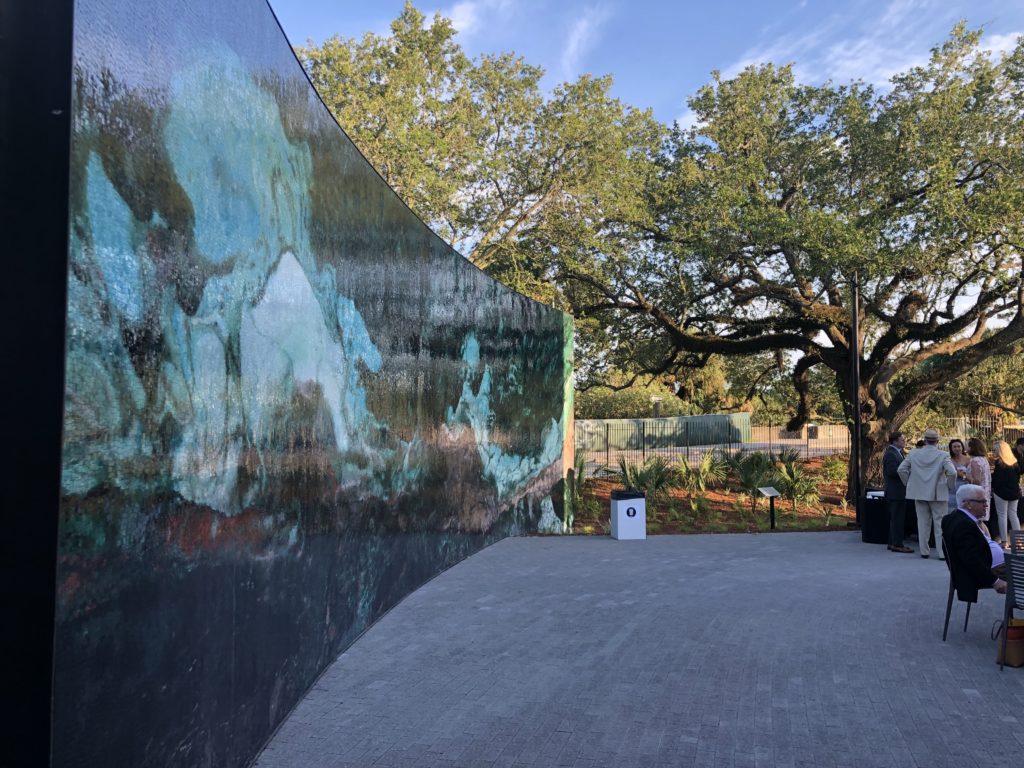
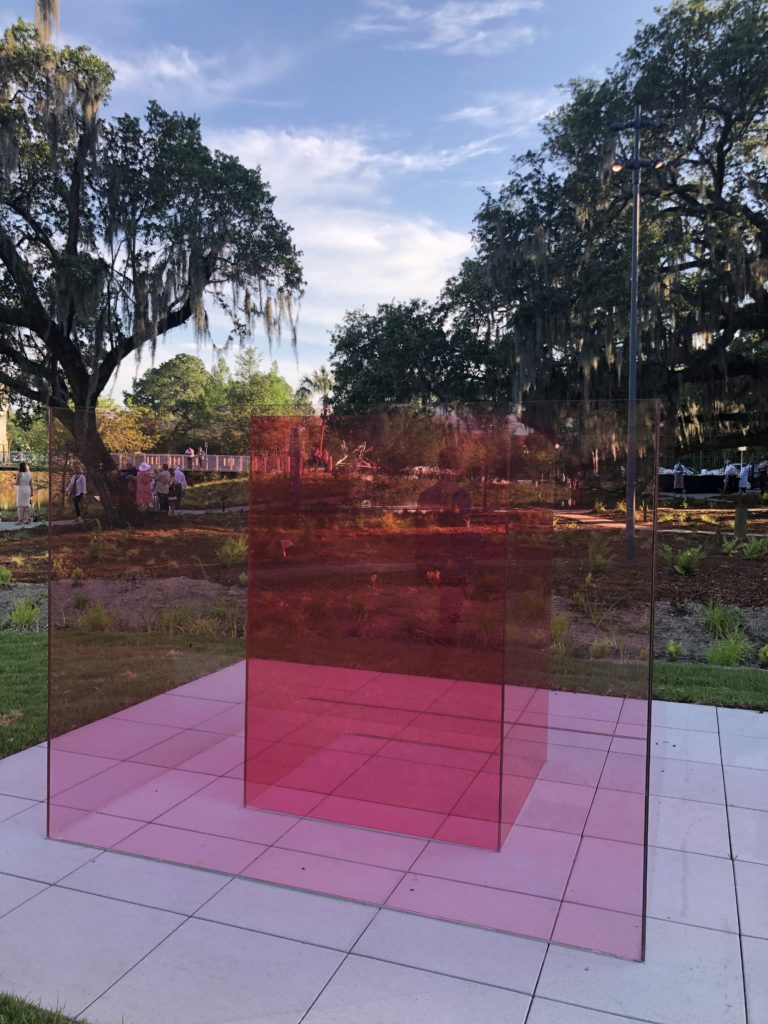
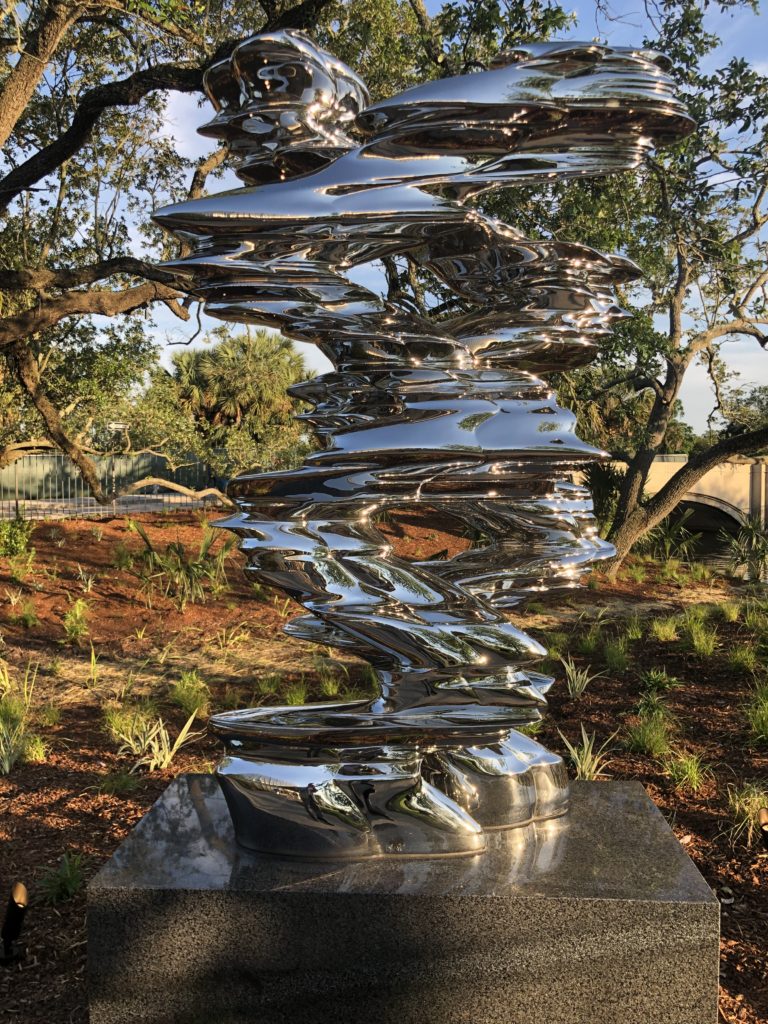
The Besthoff Sculpture Garden at the New Orleans Museum of Art (NOMA) presents numerous sculptures for the public to enjoy in a picturesque natural setting, surrounded by mature trees, native landscape and two lagoons. The design team’s work on this complex site required a high level of creativity that merged art with engineering, and as a result, transformed the garden into one of the city’s most beautiful and beloved open spaces—and one of its most elegant and effective examples of vital stormwater infrastructure.

Located within New Orleans’ historic City Park, this is one of the region’s most significant hydraulic corridors: runoff from the city tributary to Bayou St. John and surrounding areas flows through the site into an intricate network of channels, lakes and pumps before eventually entering Lake Pontchartrain. Following Hurricane Katrina in 2005, the site had suffered extensive damage caused by flooding. More than a decade later, as an extension of the Greater New Orleans Urban Water Plan, this expansion project—which doubled the original sculpture garden’s size—would become an important component in the city’s new resilience network.

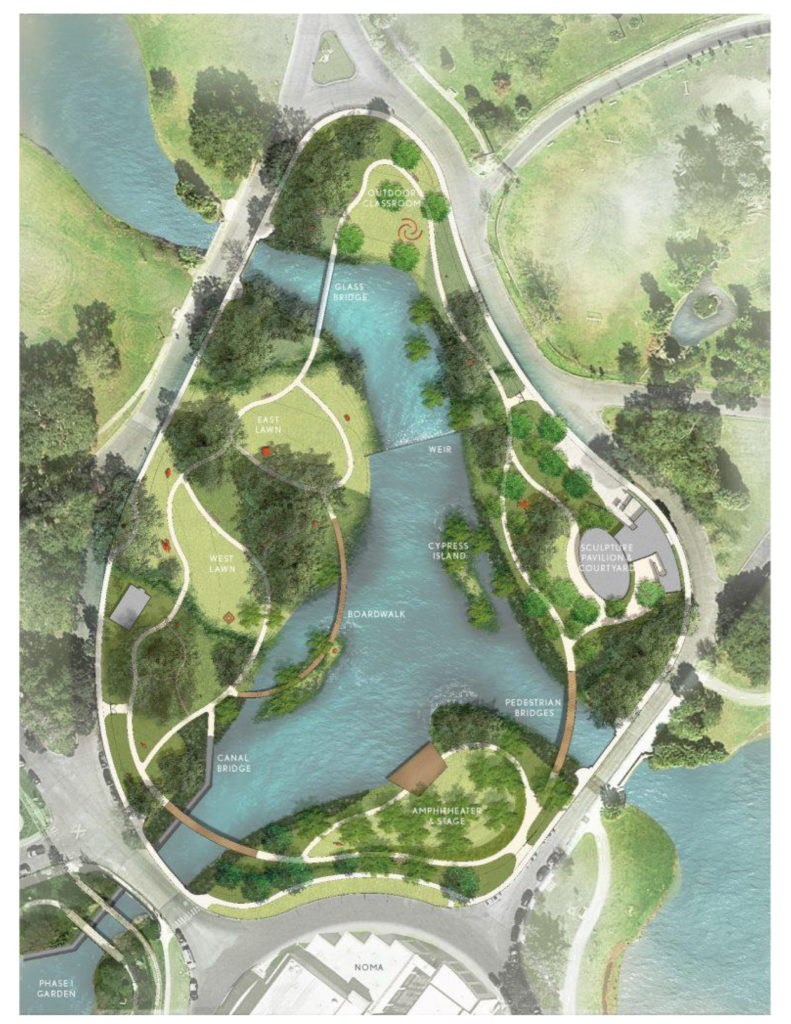
Illustrative Site Map | Image Reed Hilderbrand

Sherwood served as civil engineers on the expansion and worked with NOMA and Reed Hilderbrand to design and implement a low-impact development approach that integrates visitors’ circulation through the garden with green infrastructure landscape systems. Design features include a canal bridge and multiple overwater walkways that immerse visitors in the sights and sounds of the landscape and water, allowing nature to serve as the backdrop to numerous renowned public art installations. 

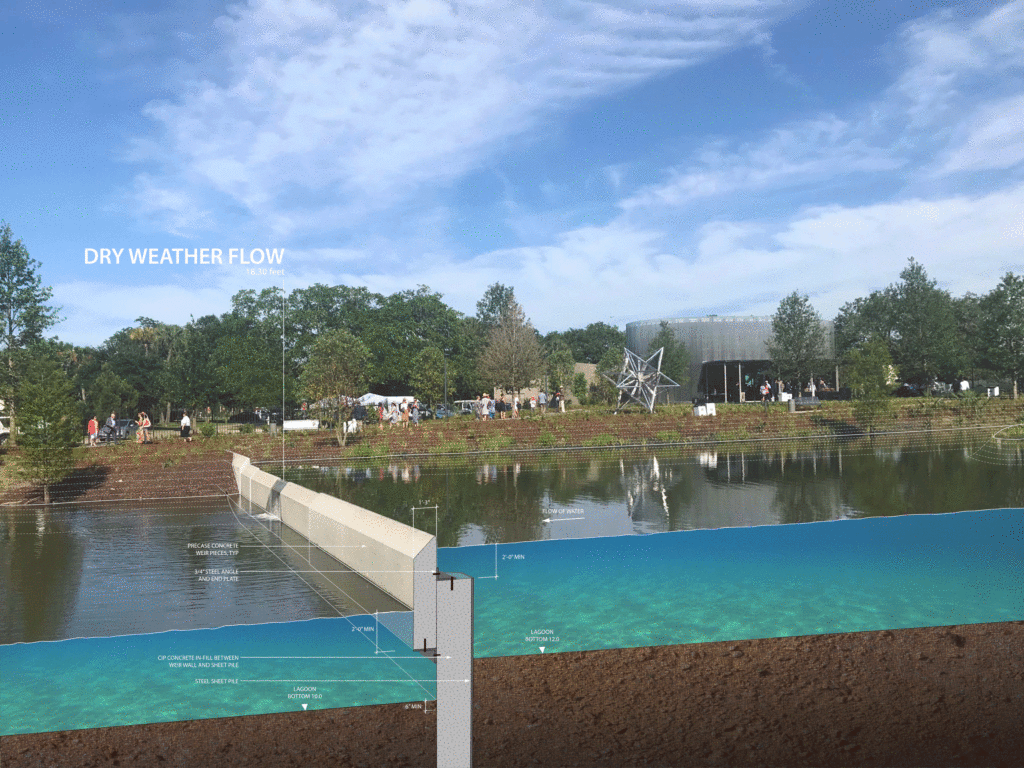
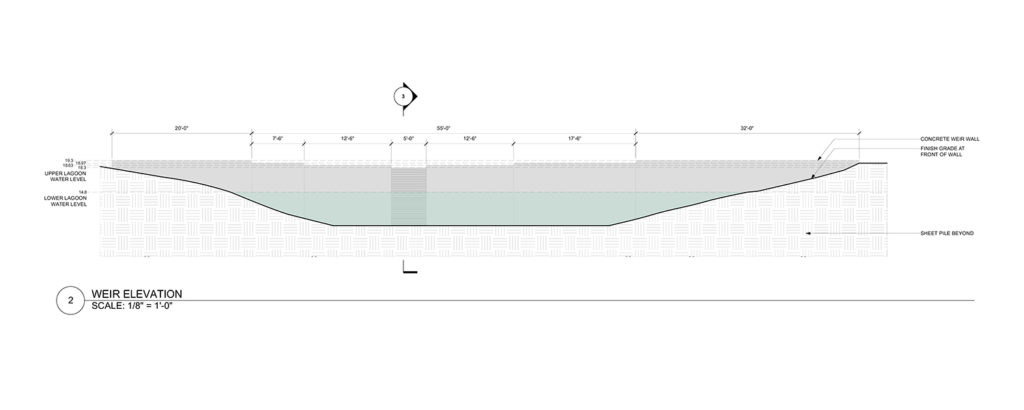
Weir Design: During Wet Seasons, the weir wall design will support stormwater flows to mitigate flooding within the Garden.

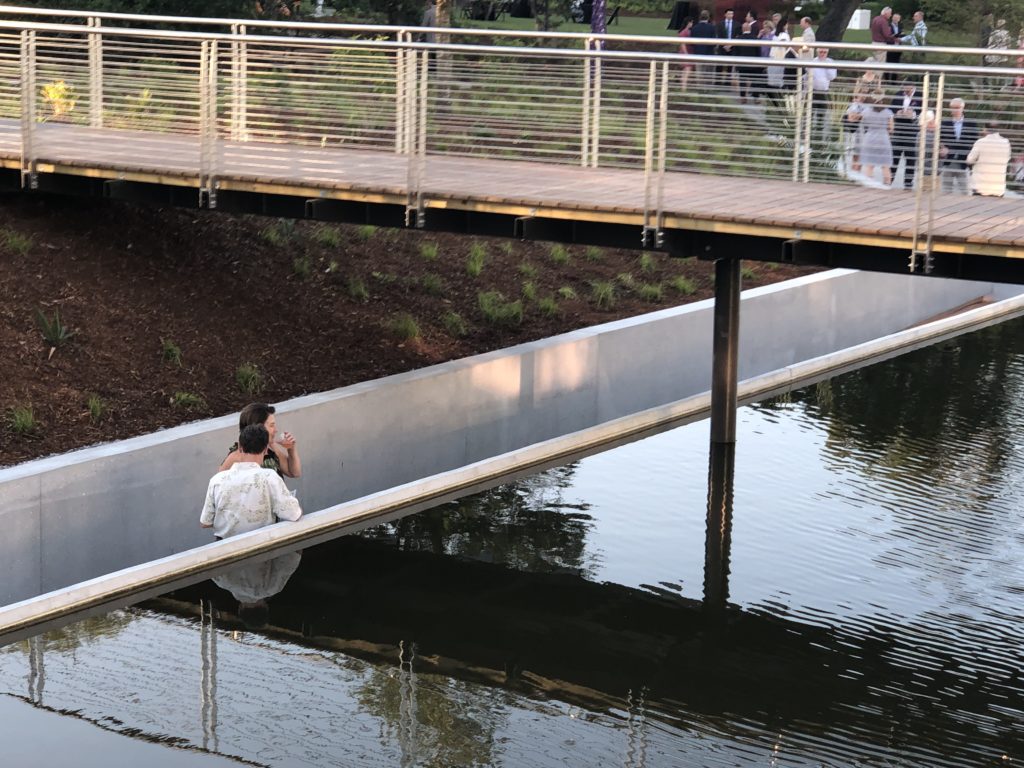
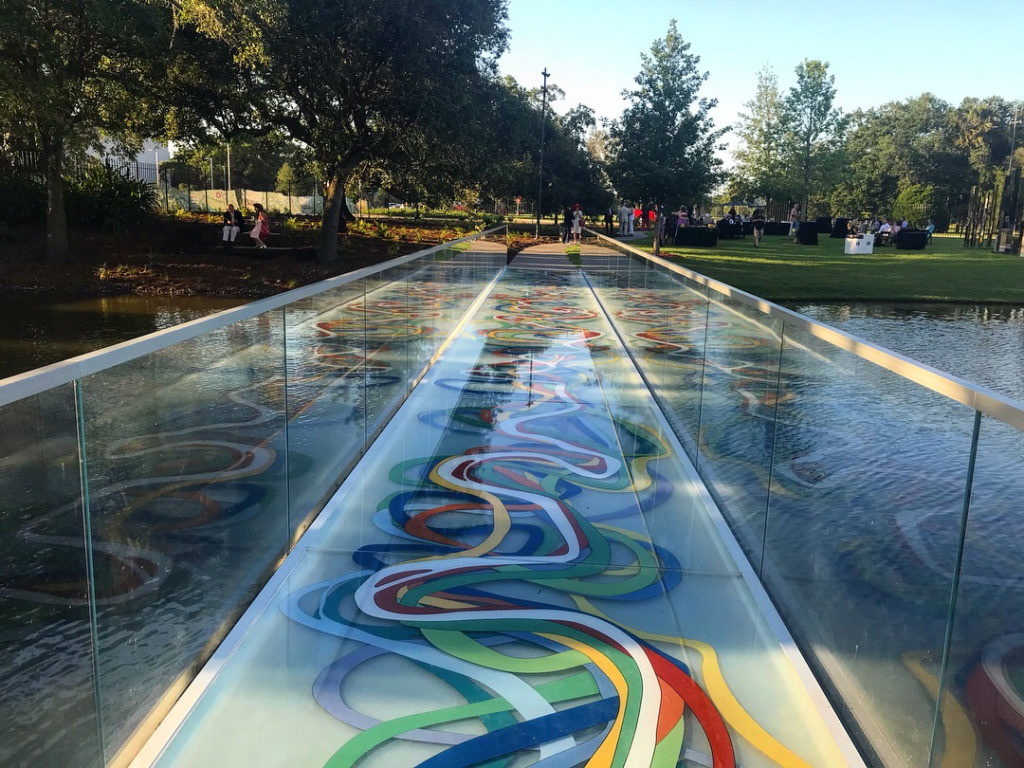
The canal bridge is a prominent feature of the expanded sculpture garden, serving as a sensory-rich transition from the existing museum spaces to the new, and creating an enhanced arrival experience that invites visitors to experience the lagoon from a unique vantage point. Situated beneath an overpass and submerged in the lagoon, water rises to the top of the walkway’s balustrade, echoing the effects of New Orleans’ well-known system of levees. Here, the canal bridge is designed to flood intentionally during large rain events and release water through a trench drain that connects to pumps for added draw-down after large inundations. Nearby, a translucent glass bridge merges art with engineering even more literally, as visitors walk directly across the artist Elyn Zimmerman’s modern depiction of the historic Fisk Maps that traced the Mississippi River’s evolution.

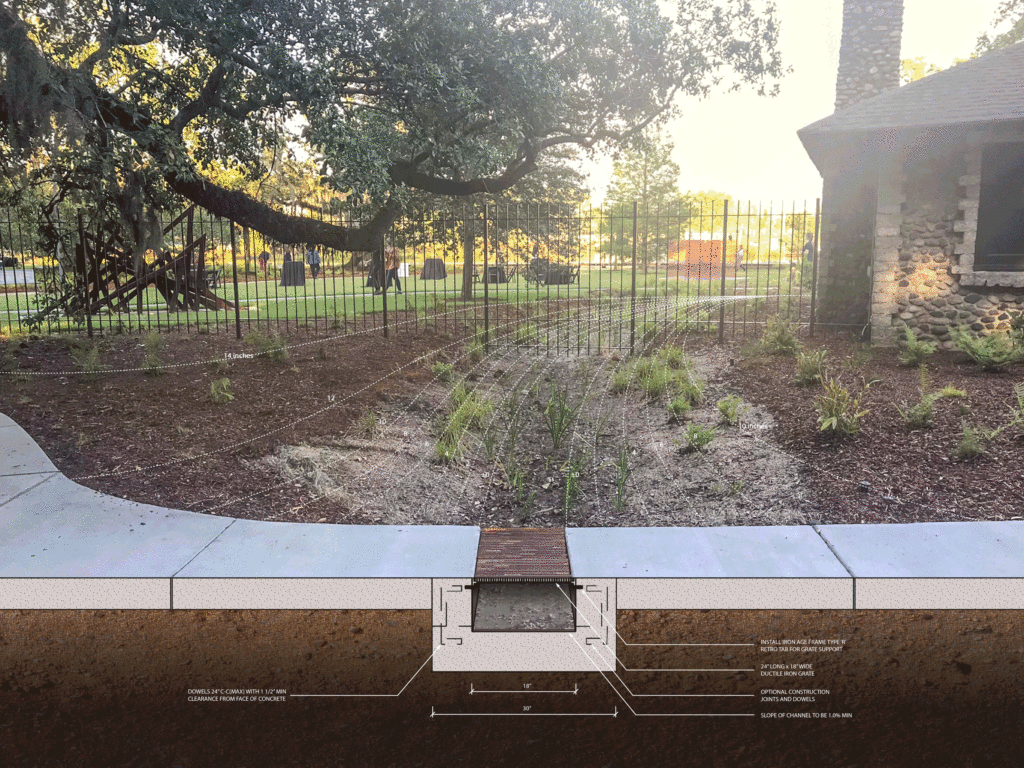
The garden funnels and treats adjacent roadway runoff through curb-cuts that guide stormwater into native bioretention swales. An elegant concrete weir and improved grading also enable small boat craft navigation and stabilize the water level during both sunny-day and storm events. Over time, this reshaping of the lagoon has resulted in a restored shoreline, reduced sediment deposits, controlled stormwater flows and improved water quality throughout NOMA’s site and in the surrounding Gentilly neighborhoods.

Curbcut and Raingardens to handle various storm events

In 2021, NOMA’s Sculpture Garden was recognized by USA Today as one of the ten best sculpture parks in the U.S., and received a Design Merit Award from the Boston Society of Landscape Architects. The project also received an Award of Merit from Engineering News Record in 2019, cited as the Texas and Louisiana region’s best project in the cultural and worship category.

LocationNew Orleans, Louisiana
ClientNew Orleans Museum of Art
Design
Partners
Reed Hilderbrand
Lee Ledbetter & Associates
Palmisano
Edward Stanley Engineers
Altieri Sebor Wieber

Size6.5 Acres
StatusCompleted 2019

See More

Buildings + Sites Projects

Infrastructure & Planning Projects

Parks & Natural Areas Projects